Biographies

1000 Years of Catholic Scientists

Author(s):
Jane Meyerhofer
Copyright:
2006
Publisher:
Ye Hedge School
Binding:
Softcover
Number of pages:
88 pages
Subject(s):
Biographies
Scientists
Review:

Nearly 200 Catholic scientists from the past thousand years are overviewed by means of brief biographies, with dates and places where each scientist lived and worked. The scientists are listed in chronological order with an alphabetical index in back. The author's primary source of information is the Catholic Encyclopedia of 1913 (which can be found online at http://www.newadvent.org). Her main purposes in working on this project are "to show students that Catholics have always been scientists" and "that there is nothing incompatible between science and the Catholic faith."

I have received QUITE a few e-mails from Catholic homeschoolers (particularly ones using Protestant science texts - which tend to highlight the religious beliefs of Protestant scientists) who want to know how to find out which scientists were Catholic. This booklet is a good place to start. Even though the Catholic Encyclopedia is available free online, this booklet is a simple and easy way of finding what you're looking for (particularly because the Catholic Encyclopedia online doesn't yet have a search feature).

Perspective:
Catholic
Additional notes:
Binding details: softcover (stapled)
Reviewed By:
Alicia Van Hecke
Review Date:
1-31-2008
Available From:
Adoremus Books

Abigail and the Widow Mary

Book cover: 'Abigail and the Widow Mary'
Author(s):
Noel Trimming
Copyright:
1996
Publisher:
The Pentland Press
Binding:
Softcover
Number of pages:
62 pages
Subject(s):
The Life of Christ
Biographical Stories
Review:

Mr. Trimming has created several very engaging stories about some of Jesus' most beloved miracles told from the point of view of children. These stories fall into the category of historical fiction. In other words, they are based on real events, but include some fictitious characters and dialogue. This technique allows us to see the story from a different point of view (in these stories, it is from a child's point of view) and more fully understand the story because of historical details such as customs and ettiquette of the day. The author develops these stories in such a way that children more fully understand the significance and joy of these miracles. For example, the first story is of the miracle of the Wedding at Cana, when Jesus turned the water into wine. This is told from the viewpoint of Abigail, the young sister of the bride. The story relates how important certain customs related to the wedding ceremony are and how nervous everyone is about the wine being in short supply. We see that running out of wine during the celebration would be a devastating blow to the family and the bridal couple and how even young Abigail fearfully awaits what will happen. After understanding this background, how much more joyous, particularly to the young reader, is it when they see how Jesus (with some encouragement from his mother - "the Widow Mary") comes to their aid? I believe these kind of stories are an excellent way of portraying to children how great Jesus' love is for us.

My children were familiar enough with these stories from the Bible that they delighted in figuring out which story was being told (the background development gives them a little chance for guessing). So enjoyable was this story, in fact, that I was coerced by my daughter into reading the entire book in one sitting. I have to admit that I found the task not at all unpleasant.

In order to give you a sampling of the book, the story of Reuben's Basket, which is about the miracle of the multiplication of the loaves and fishes, may be read online. Note: A character in one of the stories makes a joke that some may find offensive. Keeping in mind that the author is British (and some of the words involved in the joke have different connotations to British than to Americans); I don't think the joke is a real problem, but you can decide for yourself as the joke in question is included in the chapter that you can read on their website listed above.

Perspective:
Catholic
Available From:
Out of Print

Abraham Lincoln

Book cover: 'Abraham Lincoln'
Author(s):
Ingri and Edgar Parin D'Aulaire
Copyright:
1939
Publisher:
Dell Publishers
Binding:
Softcover
Number of pages:
56 pages
Subject(s):
Biographies
Grade / Age level:
Elementary
Setting:
Civil War
Review:

Our family has almost worn out our copy of this well-loved book. Abraham Lincoln the boy comes alive in the story and illustrations. We see him grow to a young man and take several adventurous trips "down river" and learn that a fortune-teller from New Orleans predicted that he would be president some day. The authors indicate his empathy for the slaves during this trip and show how his honesty and integrity eventually win the respect of many, although they don't make for an easy life. The book includes information and anecdotes from the Civil War, but avoids the topic of his assassination.

Reviewed By:
Alicia Van Hecke
Review Date:
1999
Available From:
Adoremus Books
Available From:
All Catholic Books
Available From:
By Way of the Family
Available From:
Emmanuel Books
Available From:
Our Father's House

Adventures of Saint Paul

Author(s):
Oldrich Selucky
Illustrator(s):
Zdenka Krejcova
Translator(s):
Marianne Lorraine Trouve, FSP
Copyright:
2008
Binding:
Softcover
Number of pages:
86 pages
Subject(s):
Religion
Biographies
Grade / Age level:
Grades 3-5
Setting:
Ancient Rome
Ancient Israel
Review:

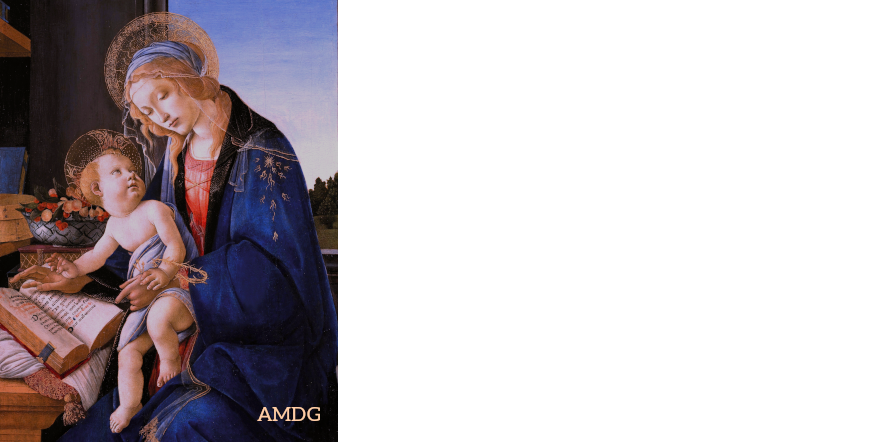
In this house, all I have to do is leave out a book with a bright, colorful, intriguing cover like Adventures of Saint Paul and someone will ask, "Hey, Mom, can I read this book?"

For the emerging reader, who has a few words under his or her belt, Adventures of Saint Paul relates the fascinating story of St. Paul on a simple level without the dumbed down language of the early reader.

Meeting children where they are, the story opens with St. Paul as a young boy, who would rather ask the Rabbi questions than make tents with his father. But he doesn't remain a boy for long.

The story moves quickly through his adventurous life as he travels extensively from one town to the next with his many different companions: Luke, Timothy,Barnabas, etc.

The story focuses on his untiring love in bringing the message of Jesus Christ to as many people as possible under the most trying of circumstances. The story paints an accurate picture of how some Christians were wary of him and others, who were not Christian, were not sure about this man, Jesus, even to the point of driving Paul out of their town.

Keeping in mind the young reader, the story omits the gruesome details of his persecuting Christians, his sufferings, and his death.

Adventures of Saint Paul offers a lighthearted look at Saint Paul for the younger child. With a pleasant balance of text and dialogue, it would also make an ideal read aloud as the engaging story moves quickly along with colorful, lively pictures.

There is a pronunciation guide and a prayer to St. Paul at the back of the book.

Touching on the highlights of his life, this would make a first-rate introduction to the life of St. Paul for young children, especially during this year dedicated by the Holy Father, Pope Benedict XVI, to St. Paul.
Perspective:
Catholic
Additional notes:
For the learning reader, you will want to assist the child with some of the words they will struggle with like Macedonia and synagogue.
Reviewed By:
Elizabeth Yank
Review Date:
9-13-2008
Available From:
The Catholic Company
Available From:
Pauline Books and Media
Available From:
your local Catholic bookstore

Archimedes and the Door of Science

Book cover: 'Archimedes and the Door of Science'
Author(s):
Jeanne Bendick
Copyright:
1962
Publisher:
Bethlehem Books
Binding:
Softcover
Number of pages:
142 pages
Subject(s):
Biographies
Scientists
Mechanics
Grade / Age level:
Grades 3-5
Grades 6-8
Setting:
Ancient Greece
Review:

Archimedes, the reknowned ancient Greek Scientist and Mathematician, had an enormous impact on all science and math since his time. This is his story, simply and even humorously told. The reader is introduced to many important concepts discovered and used by Archimedes including the lever, the pulley and his famous discoveries involving water displacement. (Numerous black and white drawings aid immensely in understanding these concepts). I love books which take concepts that have been made over-complex by modern textbooks and show how they are simple enough to be understood by children. Particularly interesting is the chapter entitled "The War Machines of Archimedes" which relates the story of his defense of Sicily by the use of Science: machines which hurled stones at the enemy and carefully designed mirrors which reflected sunlight on the enemy ships so intensely that they caught fire.Homeschoolers will appreciate Laura Berquist's helpful hints (in the introduction) for incorporating this book into your own curriculum. Keep in mind that this isn't just a Science book - it's an appropriate addition to the study of Ancient Greece and a Math Supplement as well. The complete index is useful for referring to particular topics

Additional notes:
Binding details: Sewn Softcover
Reviewed By:
Alicia Van Hecke
Review Date:
1999
Available From:
Emmanuel Books

Blessed Miguel Pro: 20th Century Martyr

Book cover: 'Blessed Miguel Pro: 20th Century Martyr'
Author(s):
Ann Ball
Copyright:
1996
Publisher:
TAN Books
Binding:
Softcover
Number of pages:
117 pages
Subject(s):
Biographies
Saints
Setting:
20th century
Mexico
Review:

Miguel Pro (1891-1927) was a young priest in Mexico during the persecution of the Church in the 1920s. He used interesting disguises to slip past authorities in order to celebrate Mass in secret and otherwise minister to his people. He fearlessly continued such dangerous missions despite health problems and eventually was arrested and martyred for his faith.The reader will learn a lot about the politics, culture and religion of his time. Also included in the book are a number of black and white photos of Blessed Miguel Pro - including several of him in disguise and those taken at his execution and his funeral. The government allowed photographers to be present at the execution in order to make an example of the martyr, but later tried to prevent their release. The appendix includes prayers and poems written by Blessed Miguel Pro, a novena and chaplet composed in his honor, and ideas for a celebration for his Feast Day, November 23.

Perspective:
Catholic
Reviewed By:
Alicia Van Hecke
Review Date:
1999
Available From:
Adoremus Books
Available From:
Stella Maris Books

Blessed Teresa of Calcutta, Missionary of Charity

Book cover: 'Blessed Teresa of Calcutta, Missionary of Charity'
Author(s):
Mary Kathleen Glavich, S.N.D.
Publisher:
Pauline Books and Media
Binding:
Softcover
Number of pages:
131 pages
Subject(s):
Biographies
Saints
Grade / Age level:
Grades 3-5
sixth grade
Setting:
20th century
India
Review:

Blessed Teresa of Calcutta is the story of her life simply told for children. Although it is a children's book, it covers enough material for even an adult to have a greater appreciation of her life. Written as a short chapter book with a few illustrations sprinkled throughout the book, it begins with her childhood in Albania and follows her decision to become a missionary and join the Loreto sisters, and continues after her dramatic step to serve the poorest of the poor without any financial backer. This is a true lesson in trusting in God's Divine Providence.

This book includes all the elements of a good story: an exciting plot, wonderful hero, and well written. Best of all, the story is true. Interwoven throughout the story are quotes from Mother Teresa. There is also a prayer to Mother Teresa and a glossary. (Intermediate reading level - recommended for ages 9-12).

Reviewed By:
Elizabeth Yank
Review Date:
4-2-04
Available From:
Catholic Shopper
Available From:
Leaflet Missal Company

Bully for You, Teddy Roosevelt

Book cover: 'Bully for You, Teddy Roosevelt'
Author(s):
Jean Fritz
Copyright:
1991
Publisher:
Scholastic
Binding:
Softcover
Number of pages:
121 pages
Subject(s):
Biographies
Grade / Age level:
Grades 6-8
Setting:
19th century
United States
Review:

This is an interesting biography of one of our nation's most colorful presidents. It was interesting to discover that Teddy Roosevelt (1858-1919) was a rather sickly youth who suffered from asthma. His determination in overcoming his illness and living a full life despite his rather frail body help to make him a man who loved life and tried to live his life to the fullest - especially enjoying the world around him. He was a nature enthusiast and an avid hunter and is considered one of the pioneers of the conservation movement - although certainly not what some today might call a "wacko environmentalist." This aspect of the story might lead to some interesting discussions with your children about a proper stewardship of nature. It is interesting to note how he was affected by the harsh winter of 1886-1887 which devastated the Dakotas where Roosevelt had a huge ranch. I believe this was the same year described in the book The Long Winter by Laura Ingalls Wilder. A comparison of the two perspectives might make an interesting writing assignment. I can't comment on the accuracy of the author's presentation of the politics of the day - especially the war in Cuba - as I haven't read much else about it. This book would provide interesting reading and discussion material for approximately grades 5-8.

Reviewed By:
Alicia Van Hecke
Review Date:
1999

Celtic Heritage Saints

Book cover: 'Celtic Heritage Saints'
Author(s):
Marian Keaney
Copyright:
1998
Publisher:
Veritas Press
Binding:
Softcover
Number of pages:
74 pages
Subject(s):
Biographies
Saints
Grade / Age level:
All ages
Setting:
Ireland
Review:

This book offers short, readable biographies of sixteen of Ireland (and Scotland's) greatest saints (covering the years from St. Patrick through 1142). The writing style and illustrations are reminiscent of Once Upon a Time Saints by Ethel Pochocki (Bethlehem Books). Despite the simplicity of the book (approximately a 4th grade reading level) it covers an important and oft-forgotten part of Catholic history. The great monasteries of Ireland fostered learning, culture and faith that eventually spread to all of Europe (through the help of some of the great missionary saints portrayed in this book) and was a major factor in the renewal of the Catholic faith after the fall of the Roman Empire and the conquests of Europe by the barbarians. The stories are of the following saints: St. Patrick, St. Ciaran of Clonmacnoise, St. Enda of Aran, St. Brendan the Navigator, St. Kilian (Apostle of Franconia), St. Brigid Mary of Gael, St. Columbanus of Bobbio, St. Colmcille Dove of the Church, St. Finian of Clonard, St. Malachy O Morgair, St. Hilda of Whitby, St. Carthage of Lismore, St. Margaret of Scotland, St. Dympna of Gheel, St. Kevin of Glendalough, and St. Comgall of Bangor.

My children enjoyed the stories as a read aloud (especially appropriate for celebrating Saint Patrick's day, but it would also make an enjoyable and very worthwhile addition/supplement to a study of this era of history for almost any grade level.

Perspective:
Catholic
Reviewed By:
Alicia Van Hecke
Review Date:
6-20-01
Available From:
Aquinas and More
Available From:
Ignatius Press

Charles and Emma

The Darwins' Leap of Faith
Author(s):
Deborah Heiligman
ISBN:
805087215
Copyright:
2009
Publisher:
Henry Holt and Company
Binding:
Sewn Hardcover
Number of pages:
268 pages
Subject(s):
Biographies
Grade / Age level:
High School
Setting:
19th century
Resource Type:
Book(s)
Review:

I learned a few things from this young adult book about the life of Charles Darwin after his adventures on the H.M.S. Beagle. The book is based on his and his wife’s diary entries and because Charles was the more prolific writer we have more of his insights than Emma’s. The quoted material is more of a sprinkling than a basis for the book so it is mostly the author’s interpretation rather than their actual words.

Charles was agnostic from the start. His father was a wealthy physician whose money bankrolled Charles’s scientific career and lavish home life (which turned out to be a very good investment). He was a Unitarian, which the author describes as “a lenient Christian faith” though most other Christians would not agree; they would be more in line with Charles’s grandfather, Erasmus, who said it was a “featherbed to catch a falling Christian.”

Charles studied theology at Cambridge because everyone studied theology that went to university in those days; University College London, the first “godless” institution, didn’t open until 1826. Charles did not do well, though he steeped himself in the Natural Philosophy of the day—the notion that the beauty of nature proved God’s existence. This very popular philosophy during Darwin’s time is what was so threatened by his hypothesis of Natural Selection because, in Darwin's mind, evolution did not require God to develop the beauty of creatures. When someone like Charles has been raised without a clear theology and tends to take up the current philosophical fad of the day (he later followed Francis Newman for awhile until he disagreed with him, too,) we are not surprised by his eventual atheism. Charles, however, did not have the animosity towards people of faith as many of the atheists of today have.

Overall, Charles was a highly reserved man who did not want to offend anyone. (In fact he likely suffered from panic disorder and agoraphobia.) He was even incapable of disciplining his own children, though he had nannies to take care of that. Ultimately it was this extreme Victorian reserve that held him back from publishing his thoughts on the very controversial topic of Natural Selection until he could have complete proof that he was right, perhaps the same level of proof he sought after in his search for God. While he never took the leap of faith required of a Christian believer, he did publish his theory without iron-clad proof ultimately because someone else was going to beat him to it. He received a letter from Alfred Wallace who conceived the very same theory, and even then he needed some coaxing from his friends, who also testified that Charles came up with it first.

Emma Wedgwood, from the family of pottery fame, was Charles’s affluent cousin. According to the book “Charles’s Wedgwood cousins had been brought up with few, if any, rules and the encouragement to think freely.” She is often stated to be “deeply religious” though after reading this book I question people’s definition of that term. After suffering the tragic loss of Emma’s sister, Fanny, Emma’s faith was then derived mostly from a desire to see a loved one in the afterlife rather than on any deep personal belief. This theme is emphasized by the author throughout the book. I am not surprised she was unable to convince her loving husband of the existence of God. She, too, picked and chose what she wanted to believe. She turned away from the altar during mention of the Trinity, and their daughter Elizabeth decided not to be confirmed because she also did not believe in the Trinity. The frequent mention of “free thinking” in the book seemed a nod to modern rationalism. (Freethinkers, ironically, can only form opinions based on logic and science without philosophy or theology, which seems hypocritical to me.)

Though the book is based on the writings of Charles and Emma, the author does give us a good dose of her own Secularist filter. The most telling words in this regard are:

“For his part, Charles admitted that Emma had been right when she said that his looking at the world in a scientific way probably precluded him from looking at it in a religious way. Perhaps to do the great science he did, he had to focus entirely that way—to let religion in would have diluted his effort. That did not mean he would deny Emma—or anyone—their beliefs. But for him, science was the way to get answers.” (pg. 213)

Emma must not have been familiar with the long and important history of scientific discovery brought about by people of faith that continues today. This false generalization is the result of ignorance given her social circles, though it is a stereotype that the author willingly perpetuates.

The enjoyment of the book came through the loving and devoted relationship between Charles and Emma throughout their lives and tragedies. We learn about living a privileged life in Victorian England. They had 10 children, one who died at less than a month, another at age 10, and their last at age 2. Charles himself was plagued with sickness throughout his life (though the book does not mention panic disorder as the likely cause). Emma mothered him and he was willingly a child around her. She gave great comfort to Charles as well as the children during their times of illness. We really don’t get much of a scientific history; the book is primarily the personal life of Charles and Emma Darwin. One tidbit I found interesting is how different their painted portraits looked from their photographs; I would not have thought them to be of the same subjects.

The book brings to light so much of the religious confusion in 19th century England. Unfortunately the author’s anti-religious filter stifles the potential for it to enlighten the reader regarding this turbulent time so well reflected by the Darwin family. In the end the religious story is a tragic one for the Darwin clan, deteriorating into the birth of the Eugenics movement through Charles’s cousin Francis Galton that was endorsed by Charles himself (also not mentioned in the book).

I am disappointed to find a modern trend in children’s book awards to select titles with anti-religious themes, this book being no exception. Charles and Emma: The Darwins' Leap of Faith has received the YALSA-ALA Excellence in Young Adult Nonfiction award, was a National Book Award finalist, and is an honor book of the ALA’s Printz Award.

The author writes the story, which in large part is about the Darwins's religious faith (or lack thereof,) from a Secularist view.

Perspective:
Secular
Additional notes:
While the book could be read by a younger audience, the book contains too many narrow and misleading religious statements to be read by a child without the ability to see through these serious faults. It does give a deeper perspective regarding religion in 19th century England and the faith of Charles and Emma Darwin, though unfortunately through an anti-religious filter.
Reviewed By:
Kris Correira
Review Date:
7-7-2010
Available From:
your local library
Available From:
your local bookstore
Syndicate content

Back to top