History
The Song at the Scaffold
This novelette, set at the time of the French Revolution, follows the lives of the nuns of the Carmelite convent at Compiegne during those troubled times, all the way to their martyrdom at the guillotine. Despite the rather short length, the novel is very deep and very moving. The author, rather than having the charcters preach to the reader, created a story which causes the reader to consider some very substantial spiritual issues – suffering, pride, fear, and how God works in our lives. Far from a depressing tale, we are shown how the Christian spirit becomes stronger in the face of great evil. However, we also see a warning note very applicable to our own times – that human nature alone is not sufficient and that when we abandon God and religion a very frightening and chaotic side of mankind can be revealed.
The story is quite valuable from an historical perspective – particularly as we view the French Revolution from a Catholic perspective. This book would be appropriate for high school (probably Junior or Senior year) and would be excellent for teens and parents to read together in order to discuss the many facets of the story.
The Song of Bernadette
black and white, 156 min
The Spear
A fast-paced fictionalized account of the centurion who thrust the spear into the side of Christ. The book was clearly written for adults, but might be suitable for older teens. There is a great deal of violence (as might be expected), an attempted suicide, and other content appropriate for those with some degree of maturity. The story is very Catholic and the author weaves many Catholic ideas and thought into the conversations of the characters as well as showing how much people of that time (particularly the Romans) were in need of the message of Christ. The centurion in particular (Cassius Longinus) has lost all faith in fellow man and life in this world until he begins hearing about the Rabbi Yeshua and his followers. The immense quantity of well-researched historical details add a lot to the story as well.
There is a scene in which a woman commits adultery (the same woman who Jesus saves from stoning). While the issue is important and is handled well, their attraction for each other might be described in a too-sensual way for some teens.
The Story of Cardinal George
The Story of Pope Benedict XVI for Young People
The Story of Rolf and the Viking Bow
The Story of Rolf and the Viking Bow is a remarkable tale told in the style of an old Norse saga. It is the story of the Soursop family who live right on the western coast of newly Christianized Iceland around 1010 AD. Rolf, the son, is fine in all the ways a father could desire: courageous, agile, thoughtful, loyal and strong. He is also very good with a bow and arrows. His father, Hiarandi, is named the Unlucky because his fortunes have dwindled and he has lost numerous legal battles with his neighbors.
One night, while a storm rages, Hiarandi's wife convinces him to light a beacon fire to help a ship which is foundering off the coast. This is not the normal practice of the time as the coast dwellers have come to rely on the booty from wrecked ships. His actions set off a chain of events which eventually lead to his own demise. The owner of the ship is Hiarandi's brother, Kiartan. Instead of thanking Hiarandi, Kiartan steals from him and leaves him to answer for a crime that Kiartan commits.
At the "Althing" meeting, Hiarandi's covetous neighbor, Einar, charges Hiarandi with the blood debt for Kiartan's crime. Einar wins a lesser judgement against Hiarandi, however, and Hiarandi is sentenced to remain on his own property for one year, that is, not to step off it more than one bow's-shot distance. Just before the year is over, Einar's men convince Hiarandi's only remaining thrall to run away. Hiarandi chases him to within one bow's shot distance but Einar's men are waiting and kill Hiarandi. Rolf, who witnesses the whole incident, kills one of the attackers and wounds several others. Einar claims that Hiarandi stepped out of bow shot distance from his property and so his death was legal. Although his own bow shot falls some feet short of the distance, Rolf insists that someone could be found to shoot the distance and prove his father's innocence. So he travels to seek someone who can shoot better than he. Along the way he wins the loyalty of many influential men and warriors who take up his cause, but none can shoot far enough.
Finally Rolf is outlawed for the death of Einar's man and he and his cousin flee Iceland. Einar gains Hiarandi's property and lives in the house which should have been Rolf's. While at sea, Rolf's ship is captured by Vikings and he and his cousin are taken captive. The Vikings are then defeated and captured by Orkney men. Rolf and his cousin are unlawfully made thralls of the Icelandic foster son of a thane of Orkney. This boy, Grani, lacks all the virtue Rolf possesses yet Rolf is able to teach him many things. They survive a Viking attack together and travel to warn the Earl of Orkney of the Viking invaders, becoming friends along the way. In all this adventure, Rolf acquires the bow from the burial mound of a Viking warrior.
Grani frees Rolf from his thralldom but as they return to Iceland, Grani reveals that his birth father is Einar. In his pride Grani will not ask Rolf forgiveness for all the wrongs he has done him since his capture so they must go to shore as enemies. Their ship crashes off the coast and Rolf rescues Grani bringing him to Einar's house. After escaping capture, Rolf disguises himself as a woman and lives a few months at his mother's dwelling up the hill from Einar and Grani.
At a harvest feast at Einar's house, in a marvelous scene, Rolf arrives disguised as the woman and shoots the Viking bow the distance to where his father fell, thus proving his death unlawful. Einar must forfeit the property and live up the hill at the dwelling where Rolf's mother had been. Rolf sends Einar and Grani trouble after trouble until Grani's pride finally breaks and he begs Rolf's forgiveness. Rolf immediately forgives him and they are restored as neighbors and friends and the unlucky curse on the Soursop line is ended.
Although this adventure is the story of Rolf's steadfast victory over his evil circumstances, it is also the story of the maturation of Grani. He begins as a self-indulged, selfish and wrongfully proud boy and he grows into an honorable man. All along the way he can see that Rolf is in the right, but he cannot bring himself to admit it to Rolf. Finally his will accepts what his heart knew all along. The last chapter of the book is drawn masterfully to this conclusion and is as satisfying as the scene where Rolf's bow shot vindicates his father.
There is much more to the story than this summary can cover. It is full of details of Icelandic and Orkney life and of the legal system to which the people are bound. The fact that it is written entirely, flawlessly as a Norse saga lends it authenticity and makes it a joy to read.
Recommended for grades seven and up
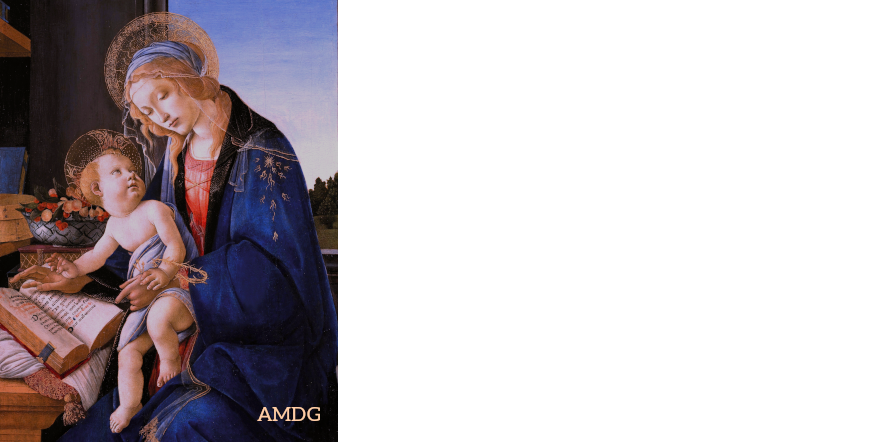
The Story of the Other Wise Man
This is the intriguing and classic story of Artaban, the "other" wise man who searches for Jesus his whole life while "foolishly" spending his treasures - which had been intended as a gift for the newborn king - on the poor and needy. A beautiful and touching story, it is quite short, but the vocabulary is challenging enough to be appropriate for upper grade school or high school.
The 1895 illustrated edition is available for free download from Project Gutenberg.
The Story of the Trapp Family Singers
This is the actual book, written in 1949, which inspired the script of the movie the Sound of Music. It is Maria and her family's autobiography, covering some early details of the Captain and Maria's separate lives and the history of the family from Maria's position as teacher to the young Maria all the way through the late 1940s. After reading the World of the Trapp Family (reviewed below), I finally picked up this book which I had started to read years earlier, but never finished.
I found this a really delightful and engaging book. Maria, who in not a professional writer and is writing in her second language, comes across with a style that is a little unusual, but very charming and personable. In many little details, the movie is surprisingly faithful to the book, but in other ways, it actually understates rather than exaggerates some of the amazing aspects of the story. This book also goes well beyond the scope of the movie, even when looked at chronologically. There are many reasons to recommend the book, but my favorite aspect of the book is how Maria comments and reflects (in a very Catholic way, may I add) upon the events surrounding her and her family – the providence of God in many parts of their lives, the importance of music in culture, her thoughts on the discipline of children, some of the terrible events and persons of Europe during World War II, and on and on. Although I was reading the book to myself (and there are many reflections of interest to Catholic mothers), there were many, many little fascinating and humorous stories within the story that I had to share with my husband and children.
The Strange Intruder
Originally published in Great Britain under the title The Strange Invader


