Religion Elementary
The New Catholic Quiz: First Grade
This book provides 200 questions (50 each in four different categories based on the four sections of the Catechism of the Catholic Church - Beliefs, Sacraments, Morality and Prayer) to help children reinforce basic points of Catholic doctrine. Each page has a question from each category with answers on the back of the page. The color-coding makes for easy reading and checking of answers. My children really enjoyed the sometimes humorous choices for the multiple-choice questions. I thought these made the Quiz more engaging and helped them be more memorable for children. Quiz questions can be answered informally or in a game format where scores are kept. My children enjoyed this quiz book very much.
Sample questions from this book: (page one)
Belief: God created the universe and everything in it. True or false?
When a man and a woman get married they ________.
(a. promise to love each other always, b. promise to drive the same car, c. promise to buy a house together)Why is life holy?
(a. because it is short, b. because God let us do anything we want, c. because God, whog ives life, is holy)Who leads our prayers at Mass?
(a. the priest, b. the server, c. the lector)
Imprimatur
Later update: The "The New Catholic Quiz" (or simply "Catholic Quiz") series which this book is from seems to have been out-of-print and difficult to find for a long time.
The New Catholic Quiz: Second Grade
Based on the Catechism of the Catholic Church. See description in the review for the First Grade set.
Sample questions from this book (page one)
God the Father, the Son and the Holy Spirit are called ________.
(a. the Communion of Saints, b. the Most Holy Trinity, c. the Beatitudes)The Eucharist helps us to ___________.
(a. dream, b. think. c. love)Jesus teaches that forgiving others is better than revenge. True or false?
Prayer is more like _________.
(a. running away, b. looking for fun, c. thirsting for water)
Imprimatur
Later update: The "The New Catholic Quiz" (or simply "Catholic Quiz") series which this book is from seems to have been out-of-print and difficult to find for a long time.
The New Saint Joseph Baltimore Catechism No.1
Though very inexpensive, the New Saint Joseph Baltimore Catechisms with explanations written by Father Kelley are worth their weight in gold. They are based on the Baltimore Catechism which was first approved by the Archbishop of Baltimore, James Cardinal Gibbons in 1885. The New Saint Joseph version goes beyond the simple question-and-answer format of the original catechism, it incorporates Holy Scripture with each lesson and includes discussion questions, a fill-in-the-blank section, and suggested Bible readings at the end of each lesson. The pictures themselves are a great teaching tool, as they illustrate spiritual truths.
Memorizing the questions and answers of the catechism provides the opportunity to build a religious foundation. This basic Catholic doctrinal foundation gives children the tools necessary to defend their faith when they are old enough to apply reason and logic, much like memorizing the alphabet before learning to read and analyze literature.
In addition to memorization of the question and answers, I copy the accompanying Scripture onto a 3 by 5 index card. Then the children and I memorize the Scripture verse and discuss how it applies to the week's lesson. I am careful to emphasize the Scripture as a part of a whole picture rather than putting too much emphasis on individual verses. We review the Q&A and Scripture each day for a week, before moving on to the next lesson. Book no. 1 has the Baltimore questions and answers divided into three parts: The Creed, The Commandments, and The Sacraments and Prayer. Its recommended use is for grades three through five.
This book is available from nearly all Catholic homeschool providers.
The Orphans Find a Home
This is the story of three orphan immigrants – Maria, an Italian in her early teens, Molly, a little Irish girl with a way of getting into trouble, and Ming, a very shy Chinese girl. Maria, Molly and Ming, survive for a time by sticking together and living in a dark boiler room until their lives are changed by meeting Mother Cabrini. The author, who is a Catholic homeschooling mother, has included questions and other study helps in the areas of history, geography, vocabulary and religion. The author has also produced a sewing kit for making a Mother Cabrini habit (complete with cross and rosary) for "American Girl"-type dolls and related craft and activity books which are available from the publisher.
The Parables of Jesus
In a similar manner to The Miracles of Jesus, Tomie de Paola presents seventeen of Jesus' parables. This book makes them very accessible to small children and may even be the start of some interesting little discussions with your children about why Jesus told these stories. Some of the text of the parables is very brief.
Available in both hard and softcover editions
The Prince of Egypt
I admit, our family went to see The Prince of Egypt because of William Donahoe's recommendation. The Catholic League plugged the newly-released animated picture on the story of Moses in its newsletter as well as in an Internet message. So we joined my family at Christmas in a rare trip to the theater, along with my dad (who was going to see it because Chuck Colson had recommended it).
When we emerged from the theater, all of us agreed that there was more reason to like this film than the facts that a.) it was completely clean b.) and it was not by Disney.
I had been told of the technical perfection of the animation and special effects. This is true - the film is stylistically executed by DreamWorks with the perfection of any Disney movie. The parting of the Red Sea is spectacular. It has its share of chases, escapes, and comic moments, with strong female characters and funny animals. The story is simple to follow - so clear that my toddler son burst into tears when baby Moses had to leave his mommy to be adopted by a strange lady. I had expected all these things.
But I wasn't expecting any more than an exercise in clean filming of a token Biblical story to please the Christian market. Prince was more than that. Here's three reasons to go see the film that have nothing to do with the political battle over children's movies.
First, Prince is racially truthful. This is the first Biblical movie I have seen in which none of the characters - none - were Caucasian. Personally I am tired of depictions of our Biblical fathers and mothers that insist on giving them fair skin and sometimes blue eyes. Both the Hebrews and the Egyptians in Prince have the bone structure and skin color of their races, which I found refreshingly (not politically) correct. Aren't the Jews and Africans sometimes right when they accuse American Christians of making the Gospel into "a white man's story?" Certainly these are the images we usually give our children. Prince was a definite step in the right direction.
The filmmaker's choice to tap the heritage of the black community in using a music style inspired by Gospel spirituals was wise and effective. For its audience of children, it provided a further link between the Biblical characters and the African heritage. The Hebrew songs - particularly the children's hymn which heralds the day of Israel's freedom - were wonderful touches. My personal favorite was "Through Heaven's Eyes," the song of Jethro, Moses' future father-in-law, done in Arabian style.
Second, there was the undercurrent of a pro-life message. The catalyst of Moses' transformation from a selfish prince of Egypt who never looks twice at his servants to the deliverer of Israel is when he discovers that his "father," the Pharaoh, commanded the slaughter of the infant Hebrew boys. His father justifies this as population control: "the Hebrews were too numerous." Moses, who can't imagine being related to slaves, begins to feel compassion first for these countless baby victims, whom he narrowly escaped joining. A sense of the enormity of the crime is overwhelming in different parts of the film. While not explicit, a pro-life message comes through. The last line of the film "Deliver us!" became for me a personal prayer for an end to our nation's holocaust.
Third, the movie shows clearly the effects of the most deadly of sins - pride. This film underscores the fact that the bulk of the plagues upon Egypt were the result of one man's selfishness and unwillingness to change - the Pharaoh Rameses. What makes this moral tale so believable is that the film explores the character of the hard-hearted Pharaoh in his boyhood friendship with Moses. "Don't be the weak link in the chain," Rameses' father tells him, unfairly punishing him for things he didn't do. The fact that Moses truly loves his foster brother and has compassion for his internal struggle even as the two face off as adults raises the caliber of the storyline. Moses begs Pharaoh to yield for the sake of the Egyptians suffering from the plagues, but Rameses, tormented by the sores and pests of the plagues himself, remains bitter and unyielding. He has lost the ability to feel compassion for anyone else. When he announces that the slaughter of Hebrew children will begin again, he brings down the plague of the death of the first-born upon himself. Faced with unwittingly causing the death of his young son, he temporarily agrees to let the Hebrews go. The stark portrayal of the effects of mortal sin has probably never been rendered to this depth in cartoon form before.
Having seen the movie, I would nominate it for an Academy Award. And along with William Donahoe and other Christian leaders, I can now say that I certainly hope that the movie industry makes more movies like Prince of Egypt (how about a sequel?). If you go to see Prince of Egypt, you'll "send a message to Hollywood," but you and your family will enjoy yourself as well.
Rated PG, 99 minutes
Executive Producer: Jeffrey Katzenberg
Director: Brenda Chapman, Steve Hickner and Simon Wells
Featuring the voice talents of: Val Kilmer, Ralph Fiennes, Sandra Bullock and Michelle Pfeiffer
Regina Doman is the author of The Shadow of the Bear: Snow White and Rose Red Retold, reviewed on this site and the mother of five children. She writes from Front Royal, VA.
The Rosary is Alive
Also available in Large Print and Spanish Large Print editions.
The Saving Name of God the Son
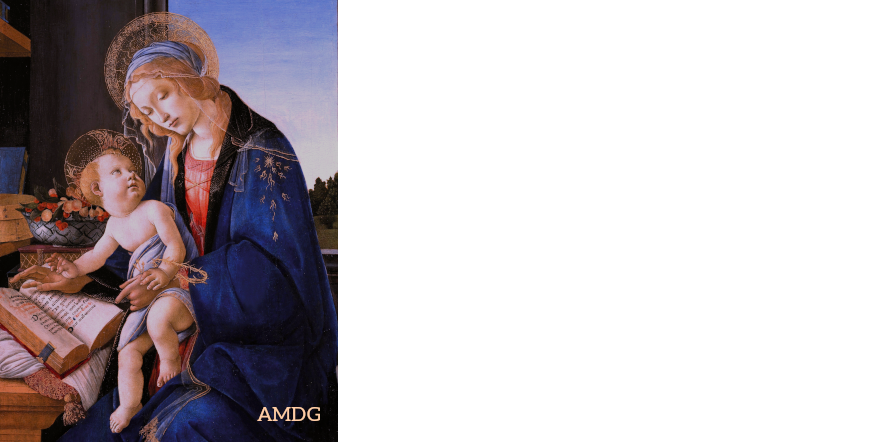
The Teaching the Language of the Faith Series presents read-aloud books that foster reflective interaction between the child listener and the adult reader. Thoughtful religious art is chosen to interrelate with words pertinent to faith understanding. Each aspect extends the meaning of the other. As children gain a familiarity with words and images relevant to Christian truth, they are prepared to enter more fully and more personally into the beauty and mystery of the Christian faith.An "Art and Text References" segment in back includes references to the Bible and the Catechism of the Catholic Church for each painting. These would be great for further discussion and family study. Kudos to Bethlehem Books for recognizing the great capacity of very young children for beauty and mystery! Note: Bethlehem Books has a free PDF page of suggestions for how to use this book with your child.
The Young Life of Mother Teresa of Calcutta
This is an interesting and unique short chapter book telling the story of Mother Teresa of Calcutta – a great lady who changed the world by following God's will and being a true messenger of peace and love. Similar to Pope John Paul II, Mother Teresa's childhood was filled with both joy and tragedy. Her early inclinations to be a missionary led her to teach at a wealthy girls school in India. One day she realized that she was called, not to teach the wealthy children, but go out and help and teach the poor, sick and homeless out on the streets of Calcutta. Also included are a timeline of her life, quotes from Mother Teresa, a list of awards she's received, a "Further Reading" list and an index.


